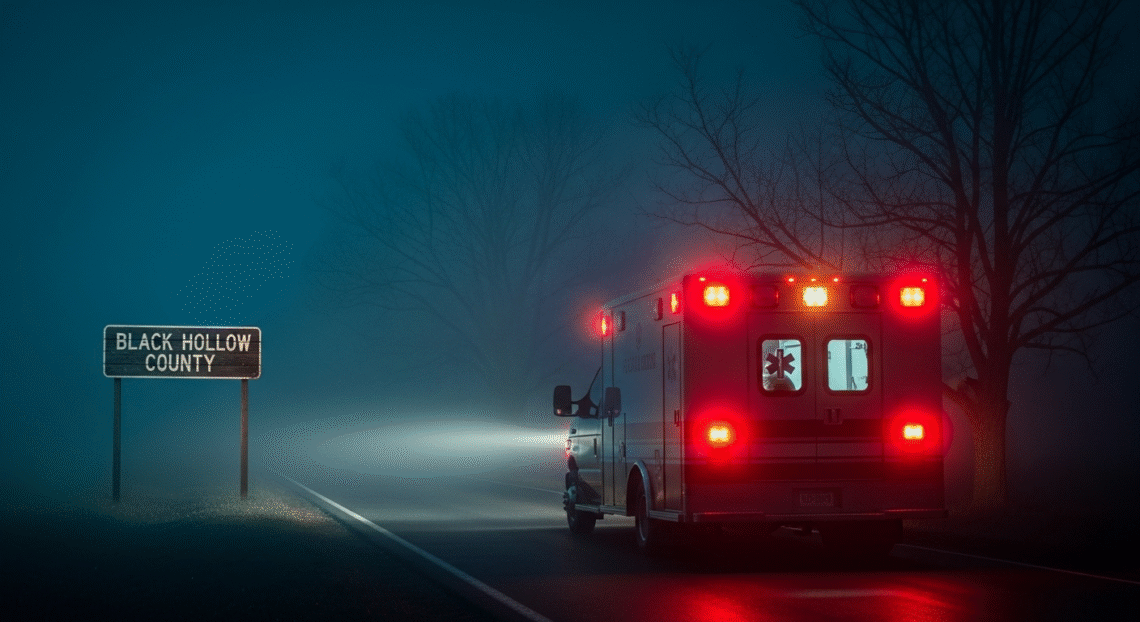
Congratulations — you’ve been hired as the overnight paramedic for Black Hollow County, the most remote district in the state. The county has only one ambulance in service, and tonight, it’s yours. Your shift begins at midnight, and your duty is simple: respond to any call that comes through the radio, keep the patients alive, and follow protocol.
Only here, the protocols are different.
Rule 1: If dispatch sends you to Old Route 9, ignore it. There’s no Route 9.
When you begin your paramedic job training, you learn to trust dispatch. Every call matters — every second counts. But in Black Hollow County, the night shift paramedics have a rule carved into the inside wall of the station: “Don’t answer Route 9.”
You won’t see Route 9 on any map. GPS skips from Route 8 straight to Route 10. Yet sometimes, around 12:45 AM, your radio will crackle with a calm, computerized voice:
“Unit 17, respond to a rollover accident, Old Route 9, mile marker 0.”
Ignore it.
You might think it’s a glitch or a prank call, but if you take it, the road you’ll drive onto isn’t paved — it’s gravel, slick with fog. Your headlights won’t reach far. There will be a wrecked ambulance ahead, same model as yours, same number.
And if you look closely, you’ll see yourself sitting in the driver’s seat.
That’s why experienced emergency responders here say: every shift tests not your skills, but your sanity.
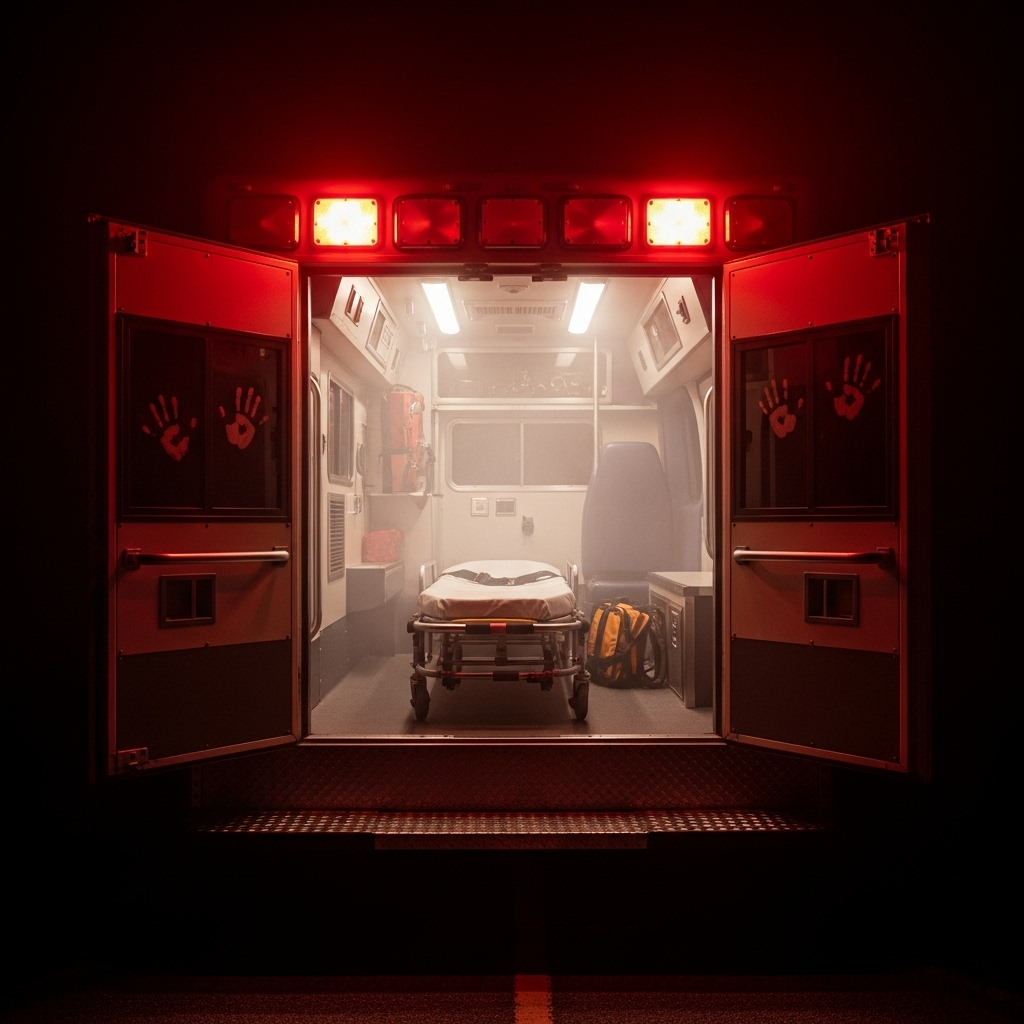
Rule 2: Never open the back doors of your ambulance while parked.
Every night shift paramedic knows how unpredictable emergency calls can be. Patients panic, shout, and sometimes make strange requests. But at Black Hollow, you’ll notice something else — the back doors rattle on their own, even when the vehicle is empty.
You’ll hear knocking sometimes — soft, polite, like someone asking to be let in. It usually starts around 1:30 AM, when the county roads go dead quiet. If you make the mistake of checking, you’ll see shadows against the frosted glass.
You might think a patient wandered in. You might think it’s a trick of the light. But don’t open the doors.
One former emergency medical technician did. They found him the next morning, still sitting behind the wheel, staring at the open doors. The inside of the ambulance was covered in handprints — too many to count — pressed from the inside out.
Now, new hires are warned: “If something wants in, it’s already too late.”
Rule 3: If your patient flatlines and whispers, “Drive faster,” pull over and leave.
Paramedics are trained to fight death.
When a patient flatlines, adrenaline takes over — chest compressions, oxygen, defibrillator, repeat. But Black Hollow County teaches a lesson that doesn’t appear in any paramedic training manual.
At exactly 2:33 AM, a call may come in from the edge of the forest, near the quarry. You’ll find a patient lying on the roadside, pale, cold, pupils fixed. But as you begin CPR, you’ll hear a faint voice through your mask — the patient whispering, “Drive faster.”
It won’t make sense. They’ll be dead. But the voice will keep repeating it, louder each time: “Drive faster. They’re behind you.”
If that happens, stop the ambulance.
Do not check the mirrors. Do not look at the rear doors. Step out, walk away, and don’t look back.
Because sometimes, the dead in Black Hollow don’t stay where they’re supposed to.
Midnight in Black Hollow County
Working overnight as a paramedic is always a test of endurance. Long hours, cold coffee, and the weight of other people’s lives. But in this county, the test goes beyond exhaustion. Here, the silence feels heavier. The fog moves like it’s breathing. The roads seem to stretch farther the later it gets.
Every emergency responder stationed here has stories they don’t tell outsiders. Stories about answering calls that vanish from the system. About patients who never existed. About finding their own ambulance parked on a road they’ve never driven.
But the scariest part isn’t the ghosts. It’s the loneliness — the endless thought that maybe you’re the only living thing still awake.
The Nature of the Job
On paper, your paramedic job duties remain the same:
-
Respond to calls
-
Stabilize patients
-
Transport safely
-
Report to dispatch
But Black Hollow County doesn’t follow the rules of medicine — or of reality. Every call becomes a question: Is this a rescue, or a warning?
Your shift lasts from midnight to 6 AM. Most nights, you’ll park under the old radio tower, listening to static, waiting for your next call. Some nights, you’ll swear you hear voices in the static — whispering your name, giving you addresses that don’t exist.
Once, an older medic said he followed one of those voices. He found a second ambulance half-buried in the swamp, with his own ID badge hanging from the mirror.
He quit the next day.
Black Hollow Dispatch Logs — Extracted Notes
12:10 AM: Routine transport. Static interference on Channel 3.
12:47 AM: Call received — Route 9 again. Ignored as per standing order.
1:22 AM: Knocking heard at back doors. Driver remained inside. No visual.
2:35 AM: Patient found DOA at quarry edge. Whispered once before silence.
3:03 AM: Unexplained light seen behind ambulance. Power fluctuation.
4:15 AM: Unit reports déjà vu — claims same route repeated three times.
The official report ends there. But every emergency medical responder who reads it feels that chill — the same one you’ll feel at 4:00 AM when you realize the roads have gone completely quiet, and your headlights no longer cast a shadow.
Why Paramedics Stay
So why do paramedics keep working in Black Hollow County?
Because no one else will.
The county pays well — better than most rural EMS jobs. And to some, that’s enough. They say the extra pay compensates for “night disturbances.” Others stay because they feel needed, or maybe because the county won’t let them leave.
There’s an old rumor that says once you drive the Black Hollow ambulance three nights in a row, the county remembers you. Dispatch keeps your frequency active, even if you quit. Sometimes, ex-employees claim their radios still buzz at night, even miles away.
“Unit 17, you’re needed. Old Route 9.”
Survival Tips for New Recruits
For anyone applying for a night shift paramedic position, remember this: skill alone won’t save you. You need instinct — and silence.
-
Keep your headlights dim when driving after 2 AM. The brighter the light, the more things notice you.
-
Always lock the ambulance when stopped, even on a call.
-
Never respond to a call with your own name attached.
-
If dispatch sounds exactly like you, turn off the radio.
-
End every shift with the same phrase: “Unit 17, signing off.”
Veterans say that phrase is what keeps you human — that it closes the night properly.
Conclusion: The Price of the Job
Being a paramedic means being the bridge between life and death. But in Black Hollow County, that bridge is cracked, and sometimes, things crawl across from the wrong side.
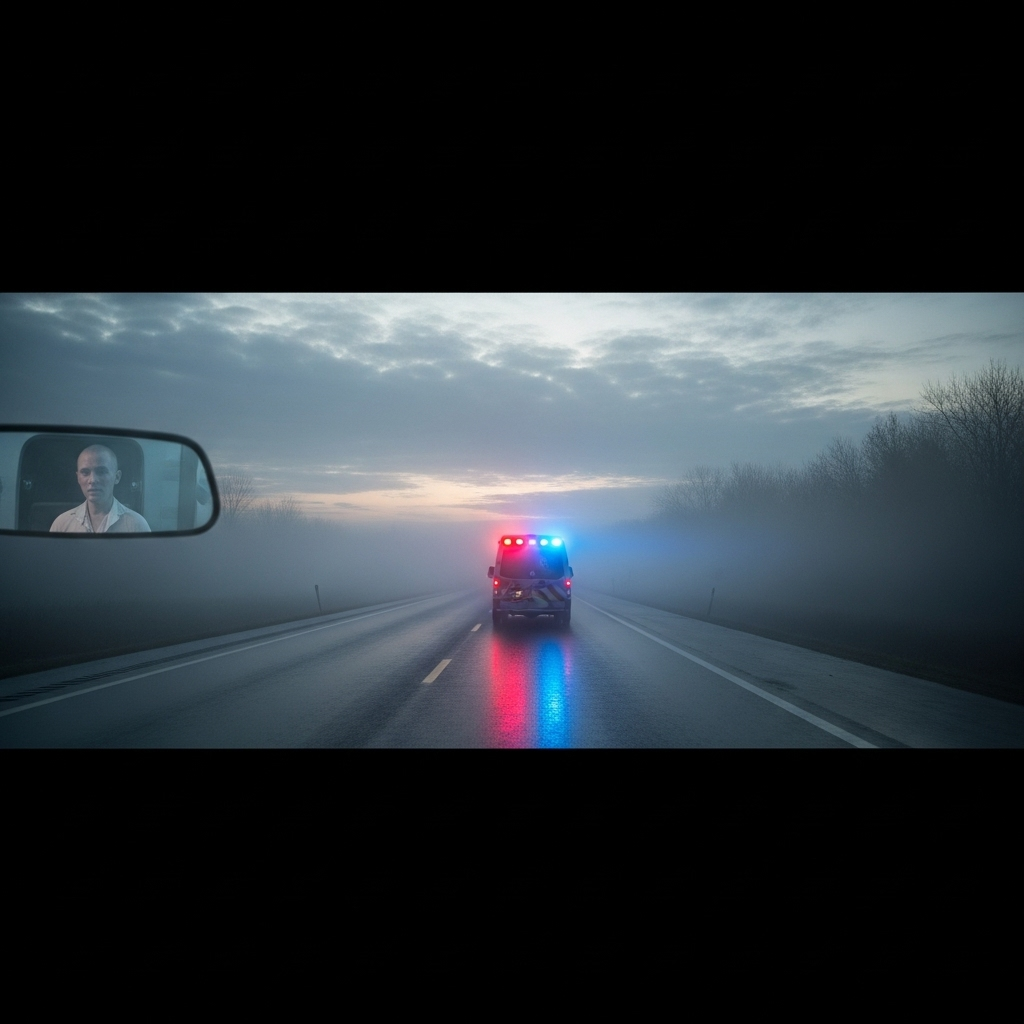
You accepted this position because you wanted to help — to save lives. But as the clock strikes 6:00 AM and the sky begins to pale, you’ll realize something: you haven’t saved anyone tonight. The calls you answered were echoes. The patients were memories. And when you finally pull into the depot, you might see another ambulance pulling out — with someone inside who looks exactly like you.
Your shift is over.
The radio is silent.
But somewhere, faintly, you can still hear the voice: “Drive faster.”